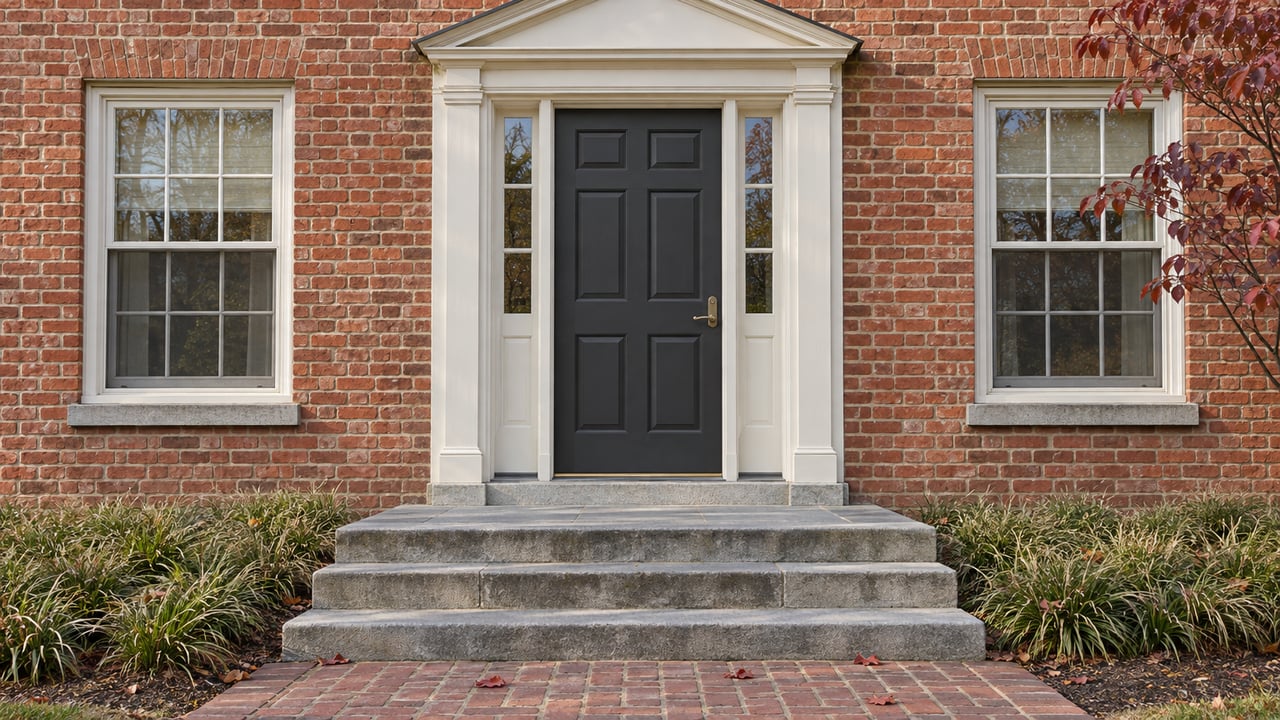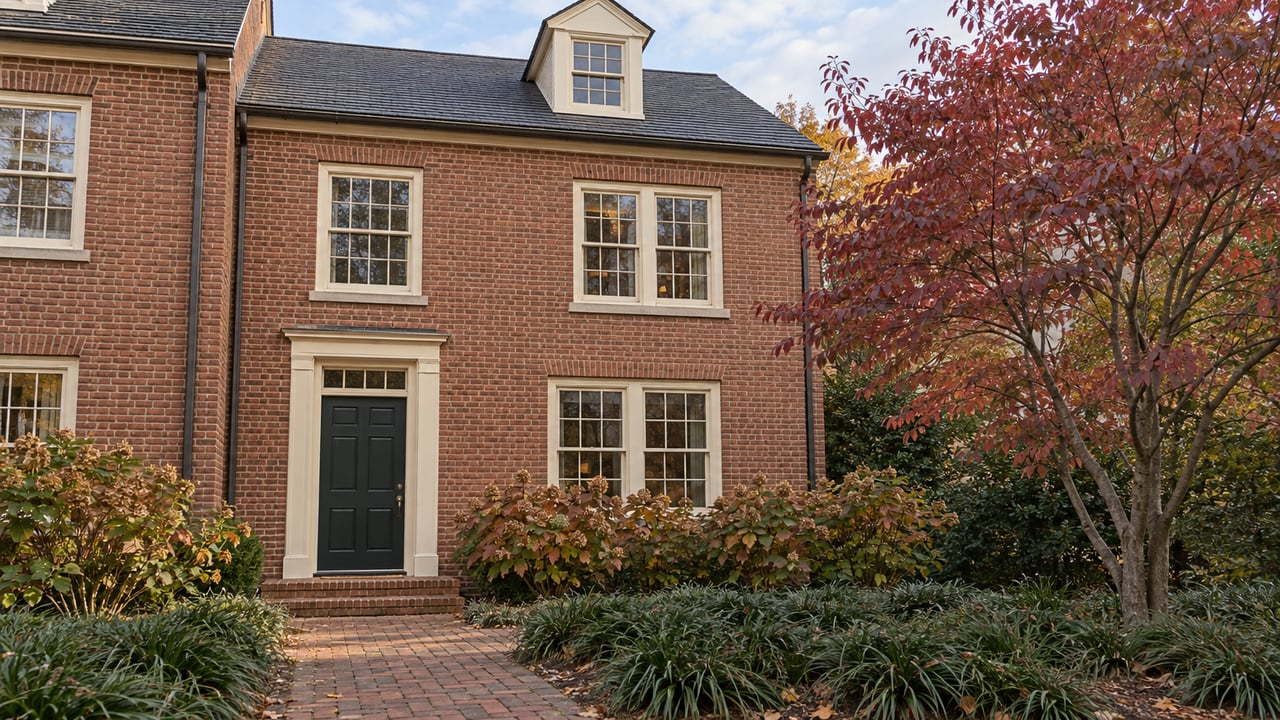
The seller's disclosure packet for a brick rowhouse on Prince Street looks the same as the one for a split-level in Fairfax. Same boxes, same checkmarks, same state form. That is the problem. In most of Northern Virginia, a box that reads "no known defects" is doing real work. Under Virginia's Residential Property Disclosure Act, the historic district box on that same form is legally required and almost entirely decorative. It tells you a rule exists. It tells you nothing about what the rule will cost you in time, money, or a delayed closing.
The form's own language makes clear that the seller "makes no representations" about what the designation actually requires. For a colonial in Fairfax County, that box might be irrelevant. For a rowhouse inside the Old and Historic Alexandria District, it is the single most important line on the page, and it says almost nothing.
Old Town Is Two Historic Districts, Not One
Buyers often assume "historic Old Town" is a single set of rules. It is not. The City of Alexandria's preservation page identifies two separate local historic districts inside and around Old Town: the Old and Historic Alexandria District and the Parker-Gray Historic District, which covers the historically Black Uptown neighborhood. The City of Alexandria's boards and commissions page also identifies the city's list of individually designated 100 Year Old Buildings, which can apply to properties outside either district boundary.
The Calendar That Doesn't Bend For Your Closing Date
Here is the fact most buyers miss until they are already under contract. Any exterior alteration visible from a public street or alley inside these districts requires a Certificate of Appropriateness from the Board of Architectural Review before a building permit can even be issued. That is not a formality that happens alongside the permit process. It happens first, and it gates everything after it.
According to the Board of Architectural Review's published meeting schedule, the board meets only on the first and third Wednesday of each month, and it does not meet at all in August. If you are closing on a historic Old Town property in late summer with plans to start exterior work in the fall, you are not working against a generic permitting timeline. You are working against a specific, published, twice-a-month calendar that has a built-in dead month. A buyer who assumes a typical 30 to 45 day contract-to-close window leaves room for a normal permit process is planning against a calendar that does not exist in Old Town the way it does elsewhere in Fairfax or Arlington.
FAR Is the Second Gate, and BAR Doesn't Control It
As The Zebra explains, even a project the Board of Architectural Review approves on appropriateness grounds can still run into a separate wall: Floor Area Ratio. FAR is a zoning tool that caps total building floor area relative to lot size, and in Alexandria's historic districts it applies independently of the BAR's design review. A buyer can get a Certificate of Appropriateness for an addition's look and materials, then discover the addition itself exceeds what the lot's FAR allows, because BAR approval and zoning compliance are two different filters, not one.
This matters most for buyers eyeing a smaller Old Town lot with plans to add a second story or expand a rear addition after closing. The design can be exactly what the neighborhood expects and still be too big for the parcel. Confirming FAR headroom before writing an offer, not after closing, is the only way to know whether the renovation you are picturing is legally possible on that specific lot.
Recorded Preservation Easements
The Historic Alexandria Foundation lists Alexandria properties carrying preservation easements including the Lafayette House at 301 South Saint Asaph Street, the Benjamin Dulany House at 601 Duke Street, and the Bayne-Fowle House at 811 Prince Street.
An easement can restrict exterior facades, protect surrounding open space, or in some cases govern significant interior architectural features, not just what is visible from the street. If a listing agent mentions "the house has an easement," that is worth a direct question before you write an offer.
When the Flood Box and the Historic District Box Land on the Same Parcel
Old Town's waterfront adds a second disclosure category that frequently overlaps with the historic district box on the same form: special flood hazard areas. The Potomac's tidal flooding affects the historic waterfront during high tide and storm events, and the same statutory language that lets sellers decline to interpret historic district ordinances also lets them decline to interpret flood zone status. The form flags that the property may be in a mapped flood zone.
For a buyer on a rowhouse near the waterfront, this means two separate due diligence tracks running on the same clock during the same inspection period. One track confirms what the Board of Architectural Review will and will not allow on the exterior. The other confirms what a flood certification will say about insurance cost and mitigation requirements. Treating these as one disclosure conversation instead of two is how buyers end up surprised twice instead of once.
What to Actually Do Before You Write the Offer
- Confirm which historic district the property sits in, OHAD or Parker-Gray, and whether it also appears on the 100 Year Old Buildings list, using the city's Historic Preservation Viewer before your inspection period closes.
- Ask directly whether the property carries a recorded preservation easement, and if so, request the specific easement document, not just a summary.
- If your plans include any exterior work, confirm FAR headroom for the lot before assuming a BAR-approved design is buildable.
- Map your target closing date against the BAR's published hearing schedule, remembering the board does not meet in August.
- If the property sits near the waterfront, run flood certification and historic district due diligence in parallel, not sequentially, since both apply to the same inspection window.
A Few Questions Worth Asking Directly
If the seller never mentioned the historic district, do I have recourse? If the box itself was left blank entirely, that is a different question worth raising with a real estate attorney before settlement.
A historic Old Town property is still one of the more durable investments in this market, and the review process exists for reasons most owners come to appreciate once they understand it. The point of walking through it before you close, rather than after, is to understand how the calendar and the property's review requirements shape your plans. Your offer terms and your renovation timeline are the only variables you actually control.
If you are weighing a historic Old Town property against a newer build elsewhere in the DMV, or you want a straight answer on what a specific address's easement, FAR, or BAR history actually means for your plans, John Edwards has walked clients through this exact process. Let's Connect before you write the offer, not after.
This article is general information, not legal, tax or financial advice. Consult a qualified professional about your situation.