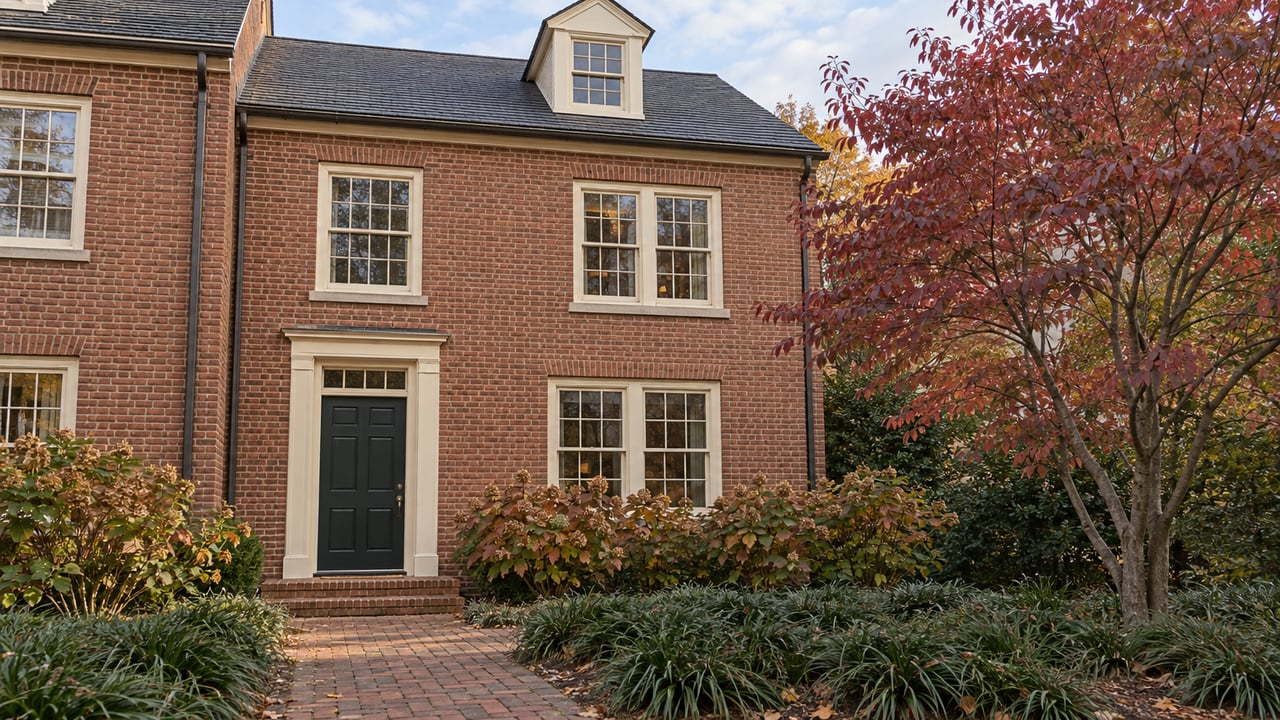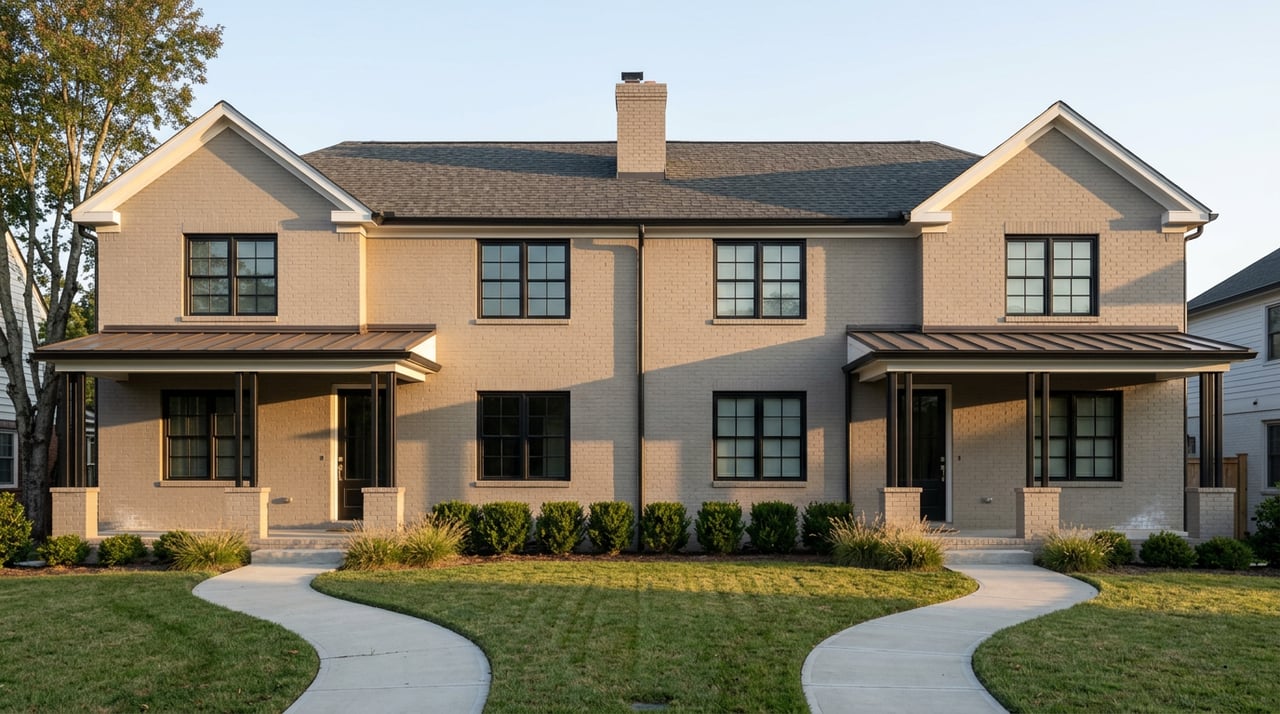
In December 2025, a four-bedroom home in North Highlands sold for $1,615,000. Three months later, in March 2026, a five-bedroom duplex built next door under Arlington's Expanded Housing Options program sold for $1,610,000. Same block, same general stretch of the market, five thousand dollars apart on two very different products. One was a traditional single-family resale. The other existed because Arlington's "Missing Middle" zoning let a builder replace a single lot with something denser.
If you've followed Arlington real estate headlines the past three years, that gap should surprise you. Opponents of the zoning change have argued that letting builders swap single-family homes for duplexes and small apartment buildings would flood neighborhoods and drag down property values. Supporters have argued the opposite, that more supply would eventually make homes more affordable across the board. That North Highlands sale confirms neither story. What it actually reflects is closer to what one of Arlington's earliest EHO builders told ARLnow: the constraint right now isn't buyer demand for these homes. It's whether a builder can afford to bet on a zoning designation still tied up in the Virginia Supreme Court.
If you're weighing Arlington against other close-in Northern Virginia neighborhoods, that distinction matters more than any median price you've already scrolled past.
Where the Case Actually Stands
Arlington's County Board voted to approve the Expanded Housing Options ordinance, known locally as Missing Middle, in March 2023, with the policy taking effect that July. A circuit court judge, David Schell, voided it in September 2024 after homeowners sued, arguing the county skipped required impact studies. The Virginia Court of Appeals reversed that decision in June 2025, but on a technicality: developers who held EHO permits should have been named parties to the original suit. The appeals court briefly reconsidered that ruling, then reaffirmed it that September.
None of that touched the actual legal question of whether EHO is valid. It still hasn't been touched. On April 8, 2026, the Virginia Supreme Court heard oral arguments on whether to take up the case at all, and on May 19 it agreed to review it. Plaintiffs filed a 51-page brief on July 29. Oral hearings in that procedural appeal are expected sometime this fall, though a date hadn't been set as of this writing. Even a ruling this fall would likely send the case back to circuit court for a full trial, this time with EHO permit holders named as defendants, something Neighbors for Neighborhoods, the group funding the lawsuit, has said it expects could happen within three to six months of the Supreme Court's next move.
Why the Builders Are the Ones Backing Away
In late July 2026, developer J. Alex Wilson, whose fight to intervene in the case set the procedural precedent the whole appeal now turns on, notified the court he was withdrawing from the litigation. He told ARLnow he still supports the underlying policy, since it makes redeveloping a single-family lot into something other than a bigger, pricier single-family home financially workable. But he's done fighting for it in court.
"I haven't taken on any new EHO projects because it's still all up in the air," he said. He added that the legal fight had brought him close to losing everything he'd built over a decade.
That's not a policy abstraction. It changes who actually shows up to bid on a lot in a specific neighborhood. Arlington's permitting dashboard listed 59 EHO projects as of April 2026, but not all of them are still moving forward as multi-unit builds. Some builders, facing the same uncertainty Wilson described, have pivoted those projects back to conventional single-family construction rather than risk a project that could get tied up in a redo trial. A lot with by-right EHO eligibility on paper may not have a single builder actively bidding on it this year.
What the Land Math Shows When a Project Does Go Through
A century-old single-family home near Virginia Square, on 14th Street North, sold for $913,000 in 2022 and was assessed at $954,000 by 2024. That lot is now the site of a six-unit EHO project. Based on a comparable gut-renovated duplex sale a block away, the five three-bedroom homes on that site have been estimated to price from the mid $800,000s to the high $900,000s. The land cost carried by the original single house was roughly $829,000. Spread across six new homes, that land cost works out to about $138,000 per unit on average.
That's the number that both sides of the political argument tend to skip. Converting a lot from one house to six units didn't multiply the land value by six. It divided it per household. That's a meaningfully different outcome than either "prices will spike" or "supply will lower costs for everyone." It lowers the entry cost for whoever buys one of the new units. It says nothing on its own about what happens to the resale value of the house two doors down, which is exactly what the North Highlands comp above suggests: not much, at least not yet.
Where This Is Actually Playing Out
One name keeps turning up. J. Alex Wilson, the builder who just walked away from the Supreme Court fight, is also the developer behind the Claremont duplex below and the Bluemont townhomes below, which says something about how concentrated this exposure actually is for the builders still in the game.
| Neighborhood | What's on the Ground Right Now | Why It's Worth Knowing |
|---|---|---|
| Claremont | An EHO duplex on 25th Street South, built by Wilson's Ventures, had construction frozen mid-build by the 2024 circuit court ruling before resuming after the 2025 appeals court reversal. | Shows a single ruling can pause a project after the framing is already up, and that a builder's other holdings can carry the same legal exposure. |
| Bluemont | Three new townhomes on N. Burlington Street, also a Wilson project, on a lot that was already zoned for a duplex before EHO applied, listed at $1,899,000 each with an open house on August 15, 2026. | A reminder that not every new multi-unit project in Arlington is an EHO case. Some redevelopment happens regardless of how the lawsuit ends. |
| North Highlands | The $1,610,000 duplex sale described above, three months and five thousand dollars apart from a traditional home on the same block. | The clearest same-block price comparison available so far. |
| Aurora Hills | A lot on 17th Street South had an approved six-unit EHO permit voided when the 2024 circuit court ruling froze the program, one of several Arlington projects paused that fall. | Shows how quickly a property can flip from "six-unit site" back to "single-family lot" depending on which court ruled that month. |
| Near Virginia Square | A six-plex under construction on 14th Street North, expected to bring per-home prices below what a comparable new single-family teardown would command. | The land-cost math above, in practice. |
What to Actually Ask If You're Looking at a Lot This Fall
- Ask whether the address has an active or voided EHO permit. The county's public dashboard has not always kept pace with the courts, and a permit that looks live may have been paused or reissued more than once.
- Ask the listing agent whether a builder had plans for the lot and walked away. A for-sale sign on an EHO-eligible property doesn't mean a builder is actually bidding on it, especially given how many projects have quietly reverted to single-family plans this year.
- Compare the sale to a resale on the same block or one immediately adjacent to it rather than to a countywide median. Over the three months ending July 2026, Arlington's median sale price was $835,000, up 7.7 percent from the same period a year earlier, with homes averaging three offers and selling in about 34 days. A separate measure, average home value, showed Arlington down slightly year over year over that same window. Neither number tells you what's happening on a single block still tangled in litigation.
- Ask what happens to a permit if the Supreme Court sends the case back to a new trial. A retrial could name every current EHO permit holder as a defendant, which is a far larger proceeding than the original suit brought by a handful of homeowners.
A Few Questions Worth Asking Directly
Does EHO eligibility mean my home will eventually be torn down for a duplex or six-plex? Not automatically. Eligibility depends on lot size and zoning specifics, and as the last three years have shown, it also depends on which court has ruled most recently. A lot being technically eligible is not the same as a builder actively pursuing it, particularly while the legal outcome is unresolved.
Should I expect to pay less for a single-family home sitting on an EHO-eligible lot? The North Highlands comparison above suggests the gap can be smaller than either side of the political debate would predict. Every block is different, so ask for recent same-block sales rather than relying on a countywide average.
Will the Virginia Supreme Court's ruling affect anything outside Arlington? Legal observers following the case have noted it could shape how similar zoning challenges get litigated elsewhere in Virginia, since the current appeal turns on a procedural question, who counts as a necessary party to a zoning lawsuit, that isn't unique to Arlington.
If you're comparing Arlington to Falls Church, McLean, or Fairfax right now and want to know which specific blocks carry this kind of legal complexity versus which don't, that's a conversation worth having before you write an offer, not after. John Edwards tracks these cases block by block across the DMV. Let's Connect.
This article is general information, not legal, tax or financial advice. Consult a qualified professional about your situation.